
A Philadelphia rowhome needs 3–5 well-placed cameras: a video doorbell or camera at the front door, one covering the rear yard and alley access, one on any side passage or gate, and optionally a driveway/parking-pad camera and one interior camera at the main stair. The rowhome layout concentrates risk at exactly two points — the front door and the rear alley — which makes coverage simpler and cheaper than for a detached house. The complication is proximity: your camera almost inevitably sees a slice of your neighbor’s property, and handling that correctly matters both legally and socially.
Why Rowhomes Are a Special Case
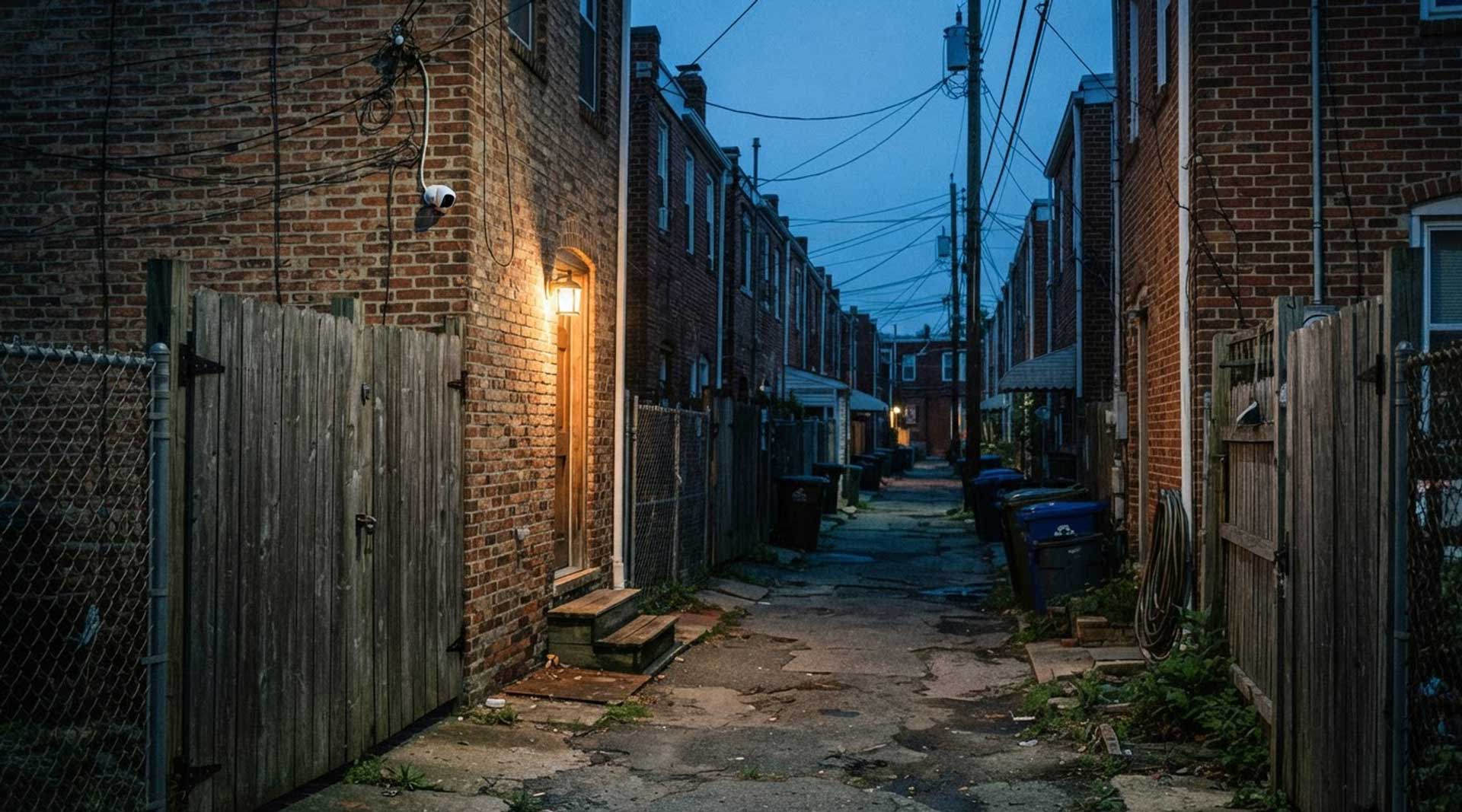
A detached suburban house has four exposed sides. A rowhome has two — front and back — with shared walls doing perimeter duty on the sides. That halves the coverage problem: no side-yard cameras, no wraparound blind spots. What replaces them: the rear alley network behind most Philly blocks, which is the primary approach for break-ins, and density — your front camera sees your stoop plus three neighbors’ stoops whether you intend it or not.
The Placement Map
| Position | Priority | What it covers | Notes |
|---|---|---|---|
| Front door (doorbell or compact camera) | 1 | Stoop, packages, approach | Mount at door height for faces, not from above |
| Rear yard / alley gate | 1 | The actual break-in route | Full-color night vision earns its cost here — alleys are dark |
| Rear door / kitchen entry | 2 | Second angle on rear access | Covers the yard camera’s blind spot under itself |
| Side passage or breezeway (if any) | 2 | Gate and passage | Only for end-of-row or homes with side access |
| Parking pad / driveway | 3 | Vehicle, plate capture | Angle low enough to read plates |
| Interior main stair / hallway | 3 | Chokepoint every intruder passes | One camera covers all interior movement |
Three to five positions cover the realistic scenarios. More than that on a standard rowhome is usually redundancy, not security. The counting logic is the same one we use for businesses: coverage by zones, not square footage.
The Neighbor Question — Law and Etiquette
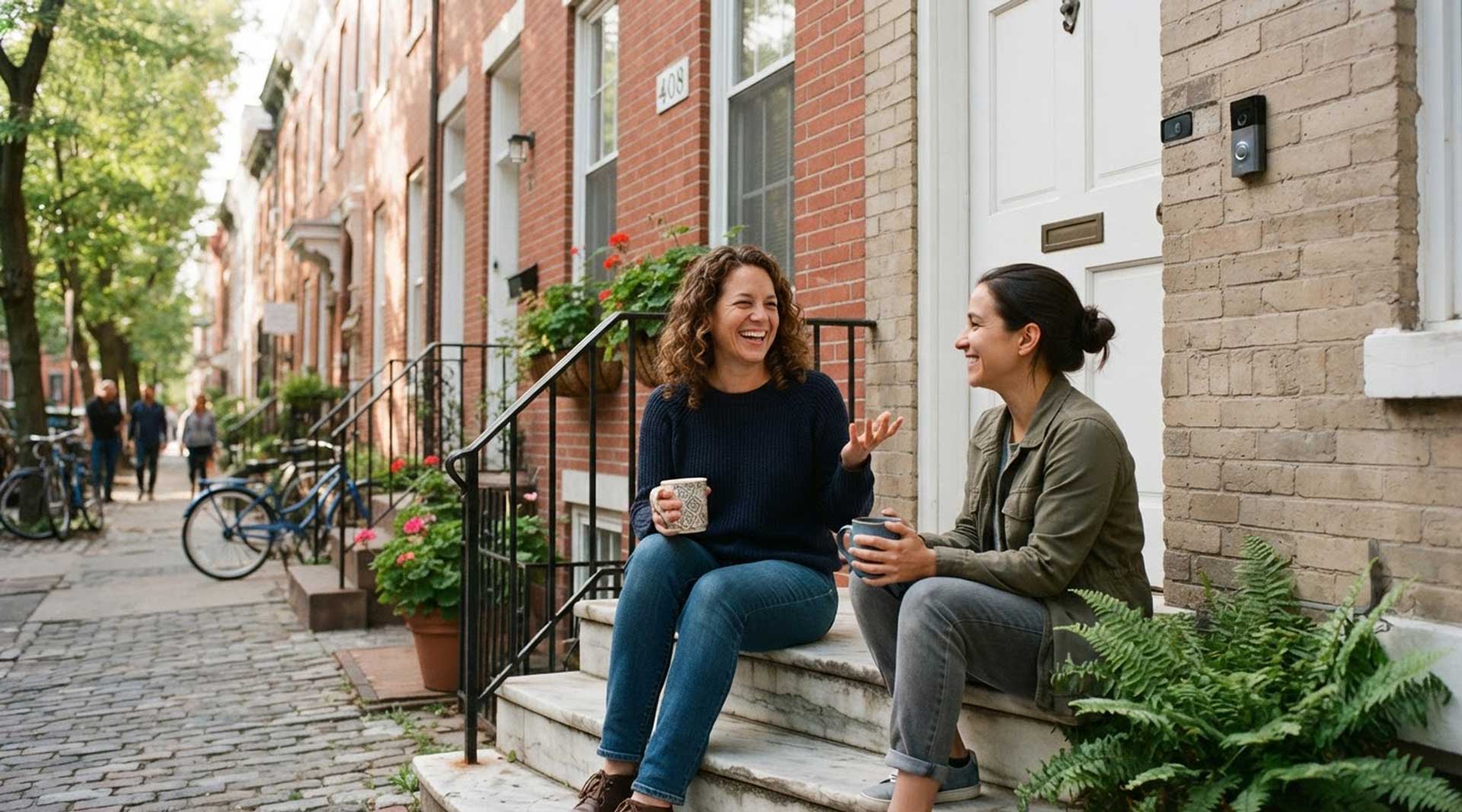
Rowhome density means your cameras will catch edges of adjacent properties. Here’s where the lines sit:
What’s legal in Pennsylvania: video of public space (street, sidewalk, shared alley) and of your own property is fine — including incidental capture of a neighbor’s facade or yard edge, where there’s no reasonable expectation of privacy. What’s not: cameras aimed into a neighbor’s windows or enclosed private areas, and — Pennsylvania being an all-party consent state — audio capture of conversations. Exterior microphones are the fastest way to turn a camera dispute into a legal one: disable them.
PA camera and audio law in plain English.
What keeps the block friendly: angle cameras down your own sight lines, use privacy masking (modern cameras can black out zones in-frame — we configure this on every install), and mention the camera to adjacent neighbors before they discover it themselves. On tight blocks, half the value of a camera is the neighbors knowing footage exists; alley cameras regularly help solve incidents three doors down.
SafeCam is open to homeowners too: registering your cameras (doorbell included) with the Police Department’s free registry means detectives can ask for your footage after an incident on the block — a genuine neighborhood contribution that costs five minutes.
SafeCam registration walkthrough.
Rowhome-Specific Technical Notes
- Brick facades. Most rowhomes are brick or masonry — mounting means drilling and sealing properly, and cable routes often run through window frames or soffits. This is the step where DIY projects stall; wired installs on masonry are the classic case for professional help. DIY vs professional, honestly.
- Wi-Fi vs wired in a rowhome. Brick party walls eat Wi-Fi. A rear camera on a wireless connection through two masonry walls will disappoint; PoE cable doesn’t care about walls.
- Night performance where it counts. Front stoops are usually streetlit; rear alleys are not. Spend the low-light budget on the back.
- Storage. A 4-camera home system with 30-day retention is the same sizing logic as a small business — and avoids the “footage already overwritten” discovery. Typical installed cost for a professional 4-camera rowhome system: from $1,300 (6MP) / $1,620 (8MP). Price your configuration.
What About Renters?
No-drill options exist: doorbell cameras with adhesive or existing-hole mounts, interior cameras on shelves facing the entry, and battery units for the rear yard. Accept the trade-offs (charging, clip-based recording) and get the landlord’s written OK for anything attached to the facade — on multifamily blocks the hallway side may be governed by the lease. Landlord perspective: camera rules for PA rental buildings.
FAQ
How many security cameras does a rowhome need?
Three to five: front door, rear yard/alley, rear door, plus optional parking and interior stair positions. The two shared walls remove the side-coverage problem detached homes have.
Where do break-ins actually happen in rowhomes?
Predominantly through rear access — yards and the alley network — and secondarily front doors. That’s why the rear camera with good night vision is priority one alongside the doorbell.
Can my camera legally see my neighbor’s property in Philadelphia?
Incidental capture of facades, sidewalks, and shared alleys is legal — there’s no reasonable expectation of privacy there. Aiming into windows or enclosed private areas is not. Disable exterior microphones: Pennsylvania requires all-party consent for audio.
Should I tell my neighbors about my cameras?
Not legally required, but on a rowhome block it’s the smart move — deterrence improves when footage is known to exist, and privacy masking (blacking out their windows in-frame) resolves most concerns before they start.
Are wireless cameras good enough for a rowhome?
For the front door, often yes. For rear coverage through brick party walls, wired PoE is markedly more reliable — masonry defeats Wi-Fi signals.
Want the placement mapped on your actual house? Home camera installation — free consultation, privacy masking configured, mics off by default. Book a visit.