
This article is general information, not legal advice — consult an attorney for your specific situation.
In Pennsylvania, video-only surveillance of your business premises is generally legal in any area where people don’t have a reasonable expectation of privacy. Audio is a different story: under the PA Wiretapping and Electronic Surveillance Control Act (18 Pa. C.S. § 5703), recording a conversation requires the consent of ALL parties. Violating it is a felony of the third degree — up to 7 years in prison and a $15,000 fine. A “surveillance in progress” sign alone does not equal consent.
Most camera systems sold today have built-in microphones. That combination — legal video, felony-grade audio — is why every Pennsylvania business owner should read the next five minutes carefully.
The Two Rules That Cover 90% of Situations
Rule 1: Video without audio — allowed in non-private areas
Sales floors, entrances, parking lots, warehouses, hallways, loading docks, office common areas: video surveillance is legal. Pennsylvania law draws the line at areas with a reasonable expectation of privacy — restrooms, changing rooms, locker rooms, lactation rooms. Cameras there are off-limits, full stop.
For apartment buildings see landlord camera rules.
Rule 2: Audio — all-party consent, no shortcuts
Pennsylvania is one of the minority all-party consent states. Intercepting an oral communication without the consent of everyone in the conversation violates 18 Pa. C.S. § 5703. That covers a camera microphone picking up two customers chatting near the register just as much as a deliberate recording.
| Situation | Legal status in PA |
|---|---|
| Video of sales floor, no audio | ✅ Legal |
| Video of parking lot / exterior | ✅ Legal |
| Camera in restroom or changing room | ❌ Illegal — expectation of privacy |
| Audio recording with signage only | ⚠️ Risky — signage alone is not consent |
| Audio with documented consent of everyone recorded | ✅ Legal, hard to maintain in practice |
| Audio of employees without written consent | ❌ High-risk felony exposure |
| Video doorbell capturing street audio | ⚠️ Gray zone — mic best disabled |
“But I Posted a Sign” — the Most Dangerous Myth
Signage (“Audio and video surveillance in progress”) helps establish that customers had notice, and courts weigh notice when assessing whether someone reasonably expected privacy. But Pennsylvania’s statute requires consent, not notice. A person who didn’t see the sign, a passer-by caught on an exterior mic, an employee who never signed anything — none of them consented. Prosecutors and civil plaintiffs don’t need many exceptions to build a case, and the penalty tier (felony III) makes the downside severe.
The practical takeaway used by risk-averse Pennsylvania businesses: run video, disable audio.
What We Do as Installers
Every commercial system TeamTech installs in the Philadelphia area ships with microphones disabled by default. If a client wants audio in a specific zone, we walk through what that requires: documented employee consent in writing, signage as a supplement (never a substitute), and a defined retention policy. Most clients, once they see the requirements, choose video-only — it delivers the security value without the legal exposure. How we configure commercial systems.
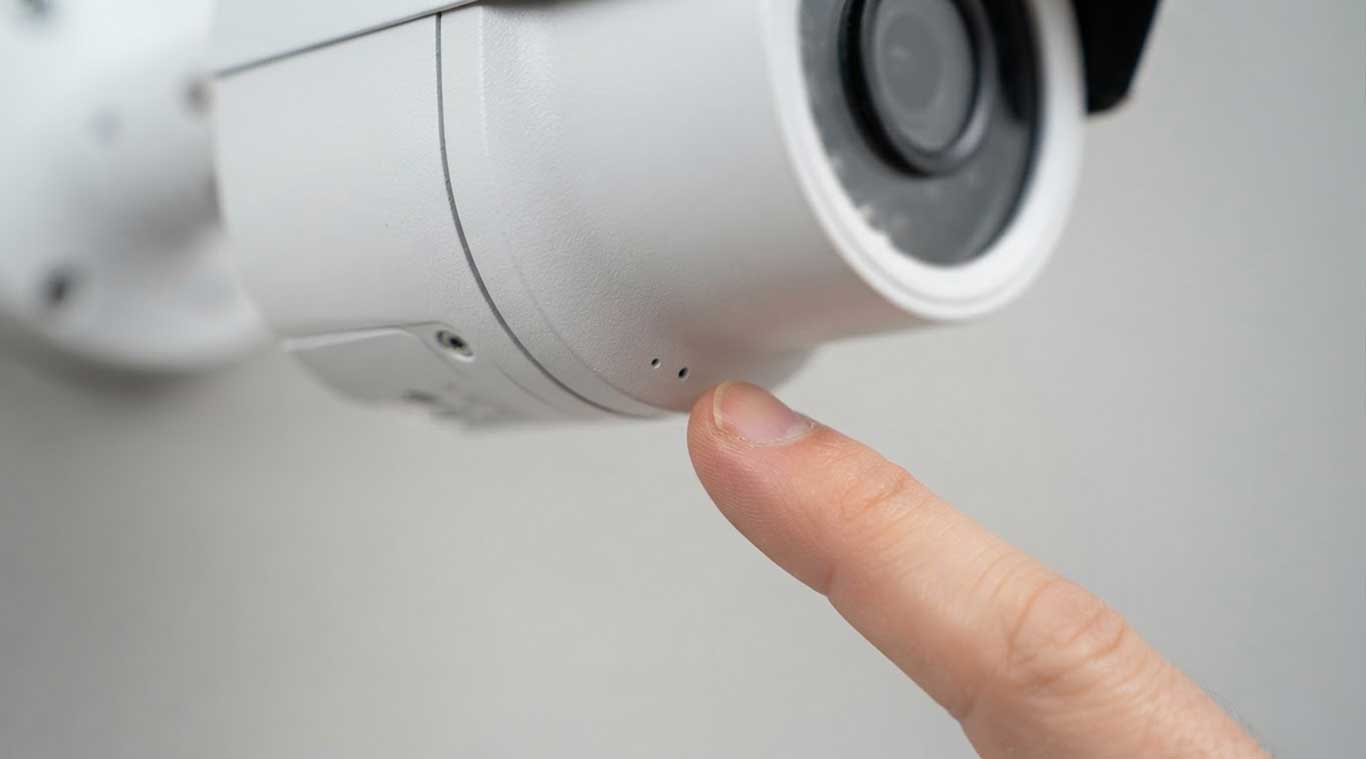
How to disable audio on common systems
- NVR-based systems (Hikvision, Dahua, UNV): disable audio per channel in recording settings — and physically unplug or mute the camera mic where supported.
- Cloud cameras (UniFi, consumer brands): microphone toggle in device settings; verify recordings afterward, not just live view.
- Video doorbells: most allow mic disabling in the app. For street-facing units in dense rowhome blocks, it’s the safe default.
If you’re unsure whether your current system records audio, check playback with sound on — many owners discover microphones they never knew were active.

Employees: the Highest-Risk Audience
Employee conversations are exactly what wiretap suits are made of. If you’re considering any audio capture in work areas:
- Get written, signed consent from every employee — as part of onboarding paperwork, not a poster in the break room.
- Re-collect consent when systems change.
- Never place audio capture in break rooms or private offices where personal calls happen.
- Remember consent covers employees — not vendors, couriers, or customers walking into range.
This is the area where “just in case” audio turns into litigation. Video answers almost every operational question audio would.
Does This Affect the City Reimbursement Program?
Only indirectly — the Philadelphia Business Security Camera Program funds exterior cameras and doesn’t require (or fund) audio. A video-only exterior system is both the legally safest and the fundable configuration.
How to get up to 75% reimbursed?
FAQ
Is it legal to have security cameras in my Pennsylvania business?
Yes — video surveillance is legal in areas without a reasonable expectation of privacy: sales floors, entrances, exteriors, warehouses. Restrooms and changing areas are always off-limits.
Can my business security cameras record audio in PA?
Only with the consent of all recorded parties — Pennsylvania’s all-party consent law (18 Pa. C.S. § 5703). Because obtaining consent from every customer and passer-by is impractical, most PA businesses run video-only.
Is a “recording in progress” sign enough to record audio?
No. Signage provides notice, but the statute requires consent. Signs are a supplement to documented consent, not a substitute for it.
What’s the penalty for illegal audio recording in Pennsylvania?
Unlawful interception is a felony of the third degree: up to 7 years imprisonment and up to $15,000 in fines, plus exposure to civil suits by recorded parties.
Can I record audio of my employees?
Only with written consent from each employee, and even then not in areas where they’d reasonably expect privacy. Most employment attorneys advise against workplace audio capture entirely.
Do these rules apply to home security cameras too?
The same statutes apply. Home video surveillance of your own property is legal; capturing audio of conversations without all-party consent is not — which is why disabling doorbell and exterior camera mics is the standard recommendation in PA.
Want a system that’s effective and compliant by design? Book a free site survey — video-first configuration, mics off by default, documentation included.