
Pennsylvania landlords can legally install video cameras in shared spaces of apartment buildings — lobbies, hallways, mailrooms, parking areas, exterior entrances — because tenants have no reasonable expectation of privacy there. Cameras are prohibited anywhere a tenant does have that expectation: inside units, and pointed at unit interiors through doors or windows. Audio recording is a separate, stricter issue: Pennsylvania’s all-party consent law makes microphone-enabled cameras a felony-grade risk. Video yes, audio no, private spaces never.
Here’s the zone-by-zone breakdown, what to put in the lease, and why cameras in common areas are as much a liability tool as a security one.
Where Cameras Are Allowed: Zone by Zone
| Location | Allowed? | Notes |
|---|---|---|
| Building entrances (exterior) | ✅ Yes | Highest-value positions; document who enters and when |
| Lobby / mailroom | ✅ Yes | Package theft is the #1 tenant complaint cameras solve |
| Hallways / stairwells | ✅ Yes | Aim along corridors, not at unit doors’ interiors when opened |
| Parking lot / garage | ✅ Yes | Wide coverage + one plate-capture position at the gate |
| Laundry room | ✅ Yes | Common space; also a frequent incident location |
| Basement / utility areas | ✅ Yes | Protects equipment; documents contractor access |
| Pointed into a unit through door/window | ❌ Never | Expectation of privacy applies |
| Inside units (even landlord-owned) | ❌ Never | Occupied units are the tenant’s private space |
| Shared bathrooms, showers, changing areas | ❌ Never | Absolute prohibition |
The dividing principle is reasonable expectation of privacy, the same standard covered in our Pennsylvania camera law guide. Common areas fail that expectation; private living space defines it.
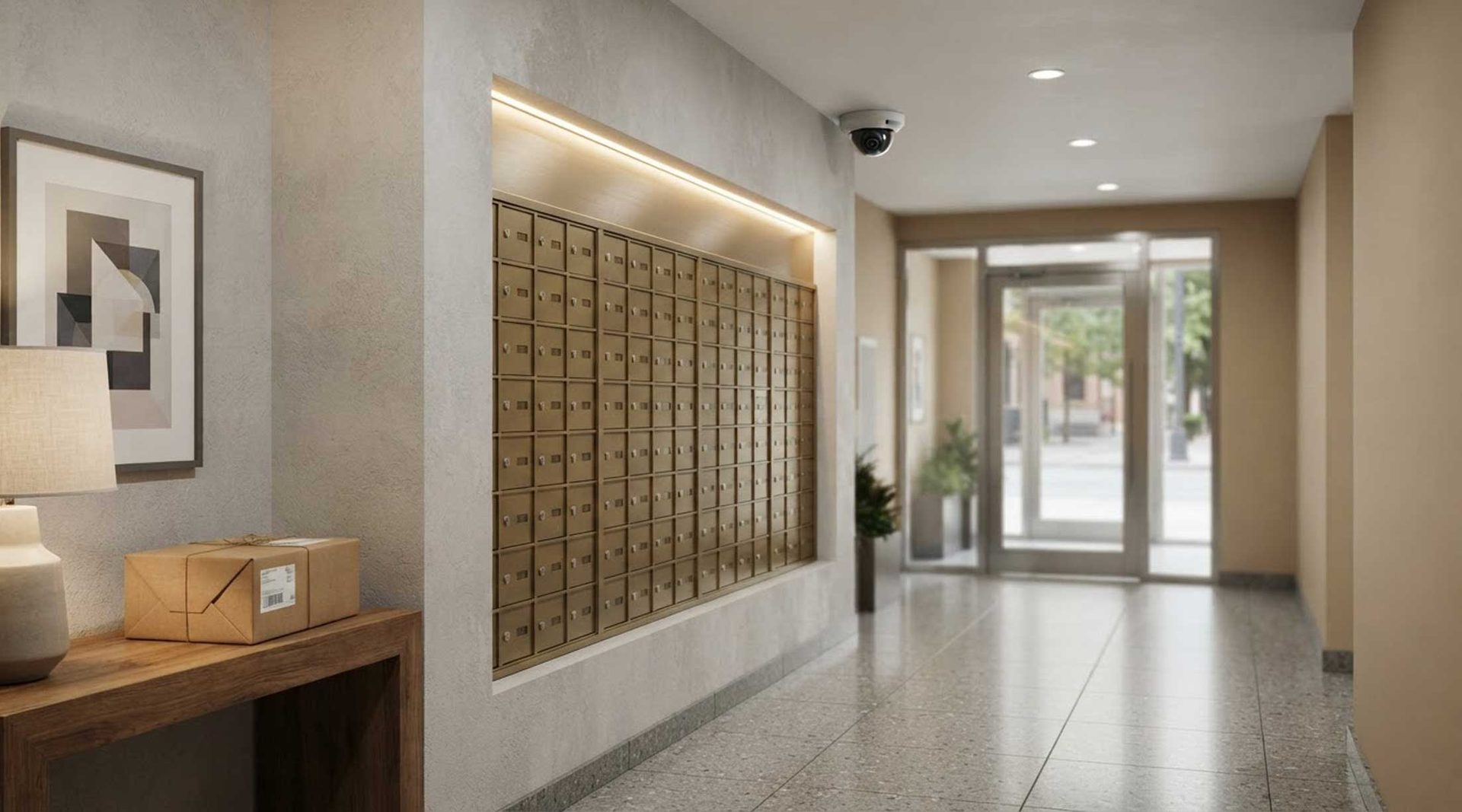
The hallway camera nuance
Hallway cameras are legal, but placement judgment matters: a camera positioned to see into a unit whenever its door opens invites complaints and legal gray area. Standard practice we follow: mount to cover corridor length and stairwell doors, angled so open unit doors show thresholds, not interiors.
Audio: Don’t
Pennsylvania is an all-party consent state (18 Pa. C.S. § 5703). A lobby camera capturing tenants’ conversations records people who never consented — and unlike a retail store, your “recorded parties” are the same residents every day, with standing to notice and sue. Every system we install in multifamily buildings runs microphones disabled. If your current cameras have mics, verify they’re off in recordings, not just live view.
Notice and the Lease: Not Required, Strongly Recommended
Pennsylvania law doesn’t require landlords to announce common-area video surveillance. Doing it anyway is cheap insurance:
- Lease clause: one paragraph disclosing video (not audio) surveillance of common areas, its purpose, and footage retention period.
- Signage at entrances: reinforces deterrence and defeats “I didn’t know” claims.
- Written policy on who can view footage and how tenants request it after an incident — apply it consistently, because inconsistent sharing (showing footage to one tenant but not another) is where disputes start.
Why This Is a Liability Tool, Not Just Security
When a slip-and-fall claim, a package theft dispute, or an assault allegation lands on a Philadelphia property owner, the outcome often turns on documentation. Camera footage of common areas showing conditions at the time of an incident is the difference between a defended claim and a settled one — and many commercial property insurers offer premium credits for documented systems. Ask your broker what they honor before installing; we’ll match the documentation package to their requirements.
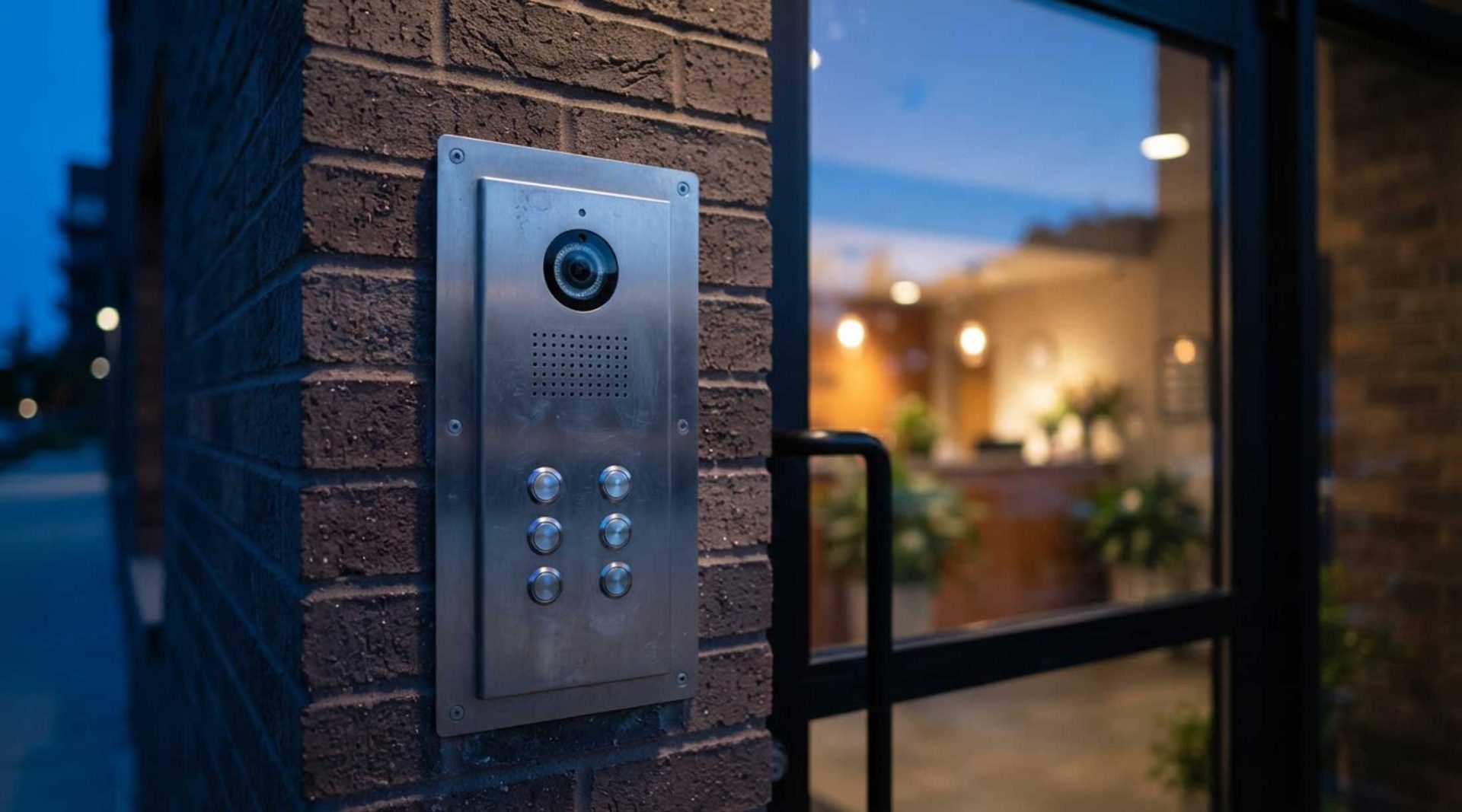
There’s also an intercom angle: modern multifamily security pairs entrance cameras with video intercoms, so tenants see who’s buzzing before letting them into your camera-covered lobby. Multi-unit intercom systems.
Costs and the City Program Question
A typical 8–12 camera system for a Philadelphia multifamily building (entrances, lobby, mailroom, parking, corridors) runs $3,260–$4,900 installed at 8MP. Full pricing breakdown.
Can landlords use the Business Security Camera Program? The program covers exterior cameras on commercial properties — a building operated as a registered, licensed business current on City taxes may qualify for its exterior cameras, but mixed-use and multifamily eligibility isn’t spelled out on the official program page. It’s worth an email to the Commerce Department (BSCP@phila.gov) before assuming either way; we flag eligibility during site surveys. How BSCP works.
Tenant Cameras: the Other Direction
Increasingly common question: can tenants install their own doorbell cameras? Broadly — inside their unit, yes; on the shared hallway side, that’s your call as the owner, and it belongs in the lease. A doorbell camera facing a shared corridor records other tenants’ daily movements, which is exactly the kind of neighbor dispute a clear lease clause prevents. Decide a policy (allow, allow with placement rules, or route through building-provided intercams) and write it down before the first dispute, not after.
FAQ
Can a landlord install cameras in apartment hallways in Pennsylvania?
Yes. Hallways are common areas without a reasonable expectation of privacy. Cameras should cover corridors and stairwells — not point into units when doors open.
Does a landlord have to tell tenants about security cameras?
Pennsylvania doesn’t require notice for common-area video surveillance, but disclosing it in the lease and posting signage is strongly recommended — it strengthens deterrence and prevents disputes.
Can apartment cameras record audio?
They shouldn’t. Pennsylvania’s all-party consent law (18 Pa. C.S. § 5703) makes recording tenants’ conversations without everyone’s consent a felony-grade risk. Standard practice is video-only with microphones disabled.
Can tenants demand to see footage?
There’s no automatic right, which is why a written policy matters: define who can request footage, for what incidents, and apply it consistently to all tenants.
How long should apartment building footage be kept?
30 days is the common baseline for multifamily buildings — long enough to cover late-reported incidents and police requests. Insurance carriers sometimes specify minimums; check before sizing storage.
Do cameras actually reduce landlord liability?
Documented common-area coverage is one of the strongest tools for defending injury and incident claims, and some insurers offer premium credits for it. Footage showing actual conditions at incident time regularly determines claim outcomes.
Own or manage a multifamily building in the Philadelphia area? Book a free site survey — camera placement, intercom integration, and a lease-ready documentation package. See our multifamily security services.