
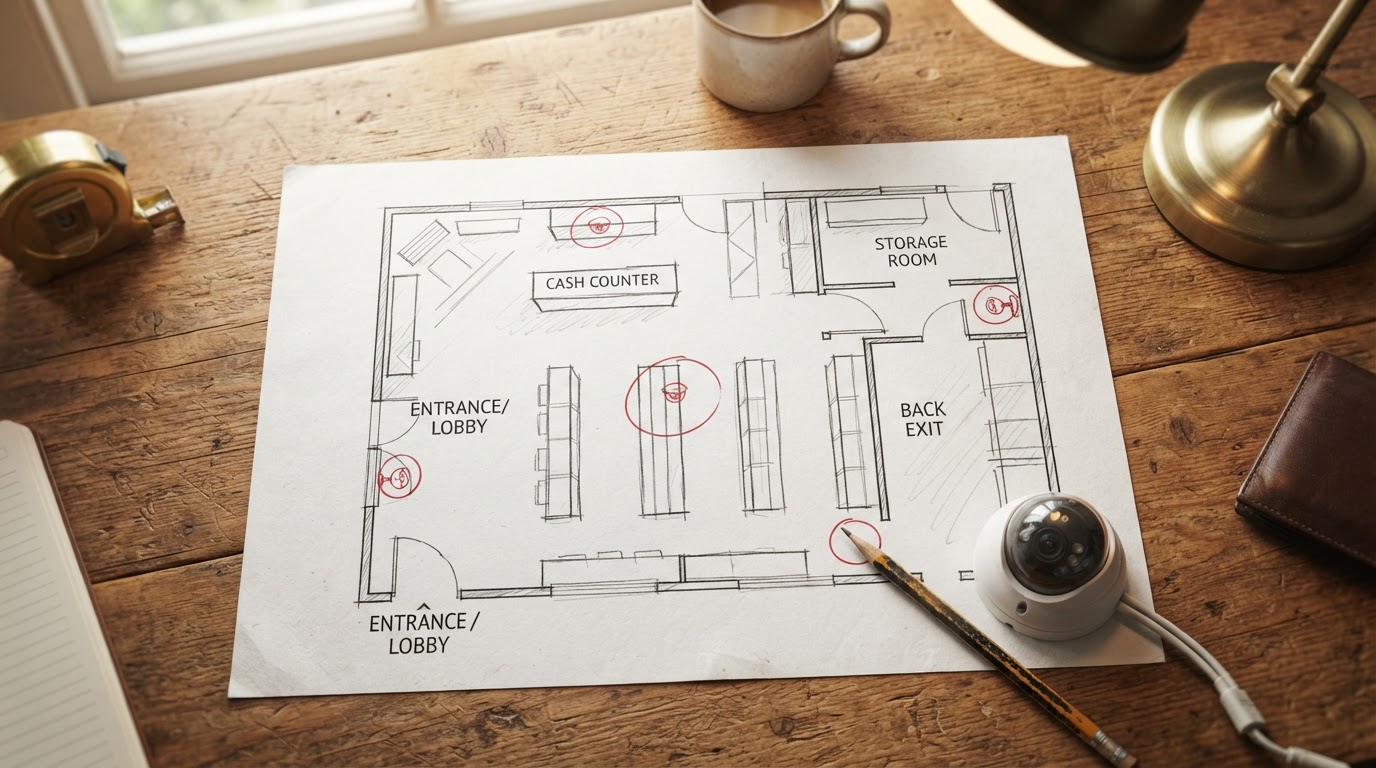
Most small storefronts are fully covered with 4 cameras; restaurants and mid-size retail typically need 6–8; multi-entrance offices 8–12; warehouses 12–16 or more. The rule that generates these numbers: one camera per entry point, one per transaction or high-value zone, one per exterior approach — then remove overlaps.
Below: the formula, counts by business type with real installed pricing, and the two mistakes that make businesses buy the wrong number.
The Coverage Formula
Count four zone types, then consolidate:
- Entry points. Every door people or goods move through — customer entrance, staff door, loading dock, gate. Each needs coverage.
- Transaction and high-value zones. Registers, safes, storage of expensive inventory, server rooms, medication storage.
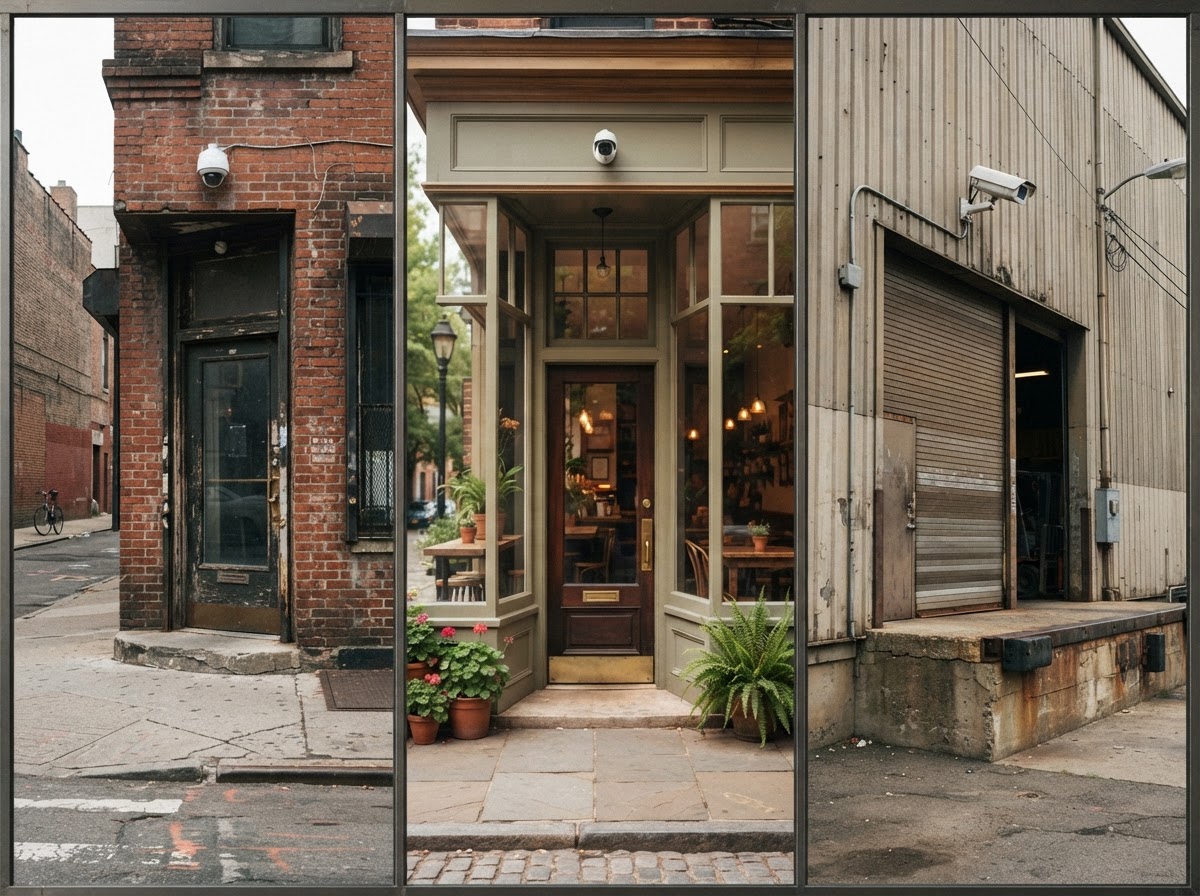
- Exterior approaches. Storefront facade, parking area, rear alley. In Philadelphia, exterior cameras carry a bonus: they’re the category the City reimburses. Up to 75% back via BSCP.
- Interior sight lines. Sales floor or work area — usually one wide-angle camera per open room, two for L-shaped spaces.
Then subtract: a well-placed camera often covers two zones (an entrance camera that also sees the register). That consolidation is where professional placement earns its keep.
Camera Counts by Business Type
Installed pricing below uses our actual rates (8MP systems; 6MP runs lower). Price your exact configuration
| Business type | Typical count | What’s covered | Installed cost (8MP) |
|---|---|---|---|
| Corner store / bodega | 4 | Entrance, register, sales floor, exterior facade | $1,620 |
| Small office | 4–6 | Entrance, reception, server room, parking | $1,620–$2,440 |
| Restaurant / cafe | 6–8 | Entrance, register, dining room, kitchen door, rear exit, exterior | $2,440–$3,260 |
| Retail store | 8 | Entrances, registers, aisles ×2, stockroom, exterior ×2 | $3,260 |
| Medical / dental office | 8–10 | Entrance, reception, corridor, medication storage exterior, parking | $3,260–$4,080 |
| Multi-tenant building | 8–12 | Lobby, each entrance, mailroom, parking, corridors | $3,260–$4,900 |
| Warehouse / logistics | 12–16+ | Docks, gates, rack aisles, office, yard, perimeter | $4,900–$6,540+ |
Two patterns worth noting. First, counts grow with entry points and zones, not square footage — a large open showroom may need fewer cameras than a small clinic with five rooms. Second, past 8 cameras the per-camera cost drops meaningfully because NVR and setup costs are shared.
The Two Classic Counting Mistakes
Buying too few and stretching them. One camera “sort of covering” the register and the door at a bad angle produces footage that identifies nobody. The test isn’t “is the area visible?” — it’s “could you identify a face or a plate from this position at this distance?” If not, that’s two cameras, not one.
Buying too many in the wrong places. Four cameras on the sales floor and none on the rear alley door is a common self-inflicted blind spot — interior theft is visible, but the actual break-in route isn’t. Exterior and entry coverage comes first; interior detail second.
Resolution Changes the Count, Too
A single 8MP camera legitimately replaces two 2MP cameras in some positions — wide storefronts, parking areas — because you can digitally zoom into recorded footage and still identify detail. This is why modern quotes sometimes show fewer cameras than an old system had: fewer, sharper positions beat many blurry ones. Where 6MP vs 8MP matters is distance work: parking lots, loading docks, plate capture. Full 6MP vs 8MP pricing.
Industry-Specific Notes
- Dispensaries: regulatory coverage requirements effectively set the count — typically 12+, covering every point of sale, storage, and entry with defined retention. Dispensary security requirements.
- Medical and dental offices: medication storage areas need dedicated coverage; DEA-adjacent compliance favors logged access plus a camera on the storage exterior. Medical office systems.
- Warehouses: camera count follows dock doors and rack aisle geometry; retention requirements from cargo insurers often size the NVR more than the camera count does. Warehouse security design.
- Multifamily buildings: common-area coverage is a liability tool as much as a security one. Multifamily systems.
FAQ
How many security cameras does a small business need?
Most small storefronts need 4: entrance, register, sales floor, and exterior facade. That’s a $1,620 installed system at 8MP — about $405 out of pocket if Philadelphia’s BSCP reimbursement applies.
Is there such a thing as too many cameras?
Yes — budget spent on redundant interior angles is budget not spent on the rear door, higher resolution, or longer retention. Coverage of entry points and approaches beats camera count.
Do I count doorbell cameras toward coverage?
As supplementary coverage only. A doorbell camera documents the person at the door well, but its field of view, mounting height, and clip-based recording don’t replace a dedicated entrance camera for business use.
How many cameras can one NVR support?
Common NVRs handle 8 or 16 channels. We size the NVR with spare channels so adding cameras later doesn’t mean replacing the recorder.
Can I start with fewer cameras and expand?
Yes — that’s the right way to phase a budget. Cover entries and exterior first, add interior detail later. Wired systems expand cleanly if cable paths are planned upfront, which is something we design into every installation. Our installation process.
Want an exact count for your floor plan instead of a table? Book a free site survey — we map entry points and give you a number with a fixed price attached.