
Medical Office Security Systems in Philadelphia
Philadelphia medical practices face after-hours break-ins targeting controlled substances, unauthorized access to prescription storage, and strict HIPAA requirements governing where cameras can and cannot be placed. We install security systems designed specifically for healthcare environments — protecting your practice, your medications, and your patients’ privacy.
HIPAA-Aware Camera Placement
Licensed & Insured in PA
Free Practice Security Assessment

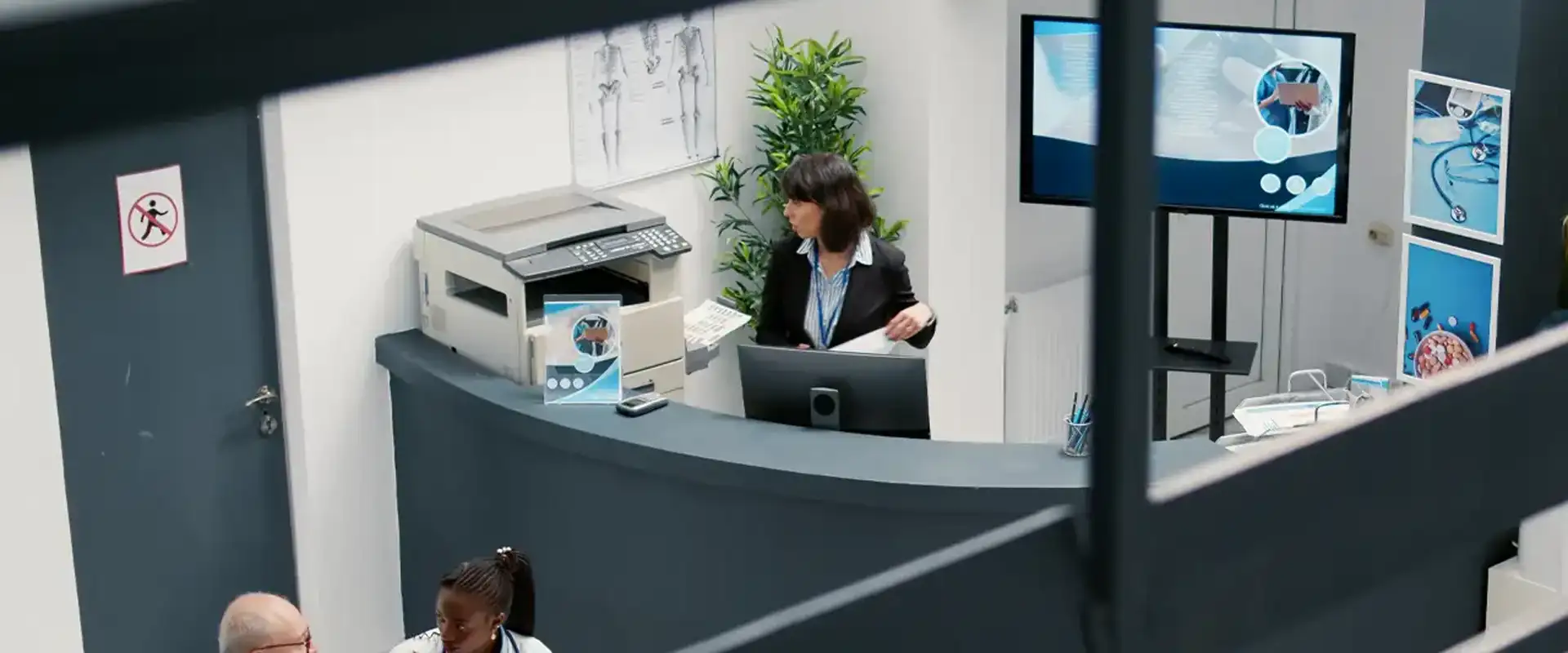






Security Systems for Medical Offices & Dental Clinics in Philadelphia
INDUSTRY OVERVIEW
Philadelphia’s medical and dental practices operate in a security environment defined by two competing pressures: the need for comprehensive physical security and the strict patient privacy requirements that govern where and how cameras can be deployed. Most commercial security companies install cameras the same way in a medical office as they would in a retail store. That approach creates HIPAA exposure that most practice owners are not aware of until a complaint is filed or an audit surfaces the issue.
Independent medical offices, dental practices, behavioral health clinics, and specialty practices throughout Philadelphia — from Northeast Philly and the Northeast Medical Center corridor to Center City, South Philly, and the Delaware County suburbs — are active targets for after-hours break-ins. The primary target is controlled substance storage: opioid medications in pain management and primary care practices, benzodiazepines and nitrous oxide in dental offices, Schedule II–V drugs in any practice with DEA registration. Philadelphia’s sustained drug theft problem means these facilities are specifically identified and targeted, not randomly selected.
TeamTech Security designs and installs security systems for Philadelphia-area medical and dental practices that balance full-facility protection with HIPAA-compliant camera placement. We conduct a dedicated placement review before specifying any camera — confirming that no equipment captures exam room interiors, patient-visible PHI on screens, or areas where patients have a reasonable expectation of privacy. Every system includes access control for medication storage, prescription areas, and staff-only zones, producing the audit logs that DEA compliance and practice management require.


Security Challenges for Medical Offices & Dental Clinics
COMMON CHALLENGES
Pharmaceutical theft targeting Philadelphia medical and dental offices is not a crime of opportunity — it is planned. Organized groups identify practices with DEA registration (publicly searchable), surveil entry points and after-hours patterns, and execute targeted break-ins specifically designed to reach medication storage before any response arrives. Primary care practices holding Schedule II opioids, dental offices with nitrous oxide and sedation medications, and behavioral health clinics with controlled prescription inventories are the highest-priority targets. The DEA’s Philadelphia Division consistently identifies healthcare facility break-ins as a significant contributor to the region’s controlled substance diversion problem. For practices in this category, adequate physical security is not a liability consideration — it is a DEA and Pennsylvania Board of Pharmacy compliance requirement that carries real consequences for insufficient protection of scheduled drugs.
The HIPAA camera placement problem is one that most security companies are not equipped to navigate. HIPAA’s Privacy Rule does not ban security cameras in medical facilities — but it does prohibit deploying cameras in ways that allow unauthorized viewing of protected health information. A camera positioned to cover a reception desk that also captures patient-visible computer screens displaying EHR data is a HIPAA violation. A camera in a hallway angled into an exam room where patients discuss medical history is a HIPAA violation. A camera in a clinical area where patients are examined or treated is a HIPAA violation. The consequence is not just a fine — it is a breach notification obligation, potential OCR investigation, and the reputational damage that follows a publicized patient privacy incident. The right camera placement protects the practice without creating new legal exposure.
Access to restricted areas within a medical practice — medication storage, the prescription pad cabinet, the records room, the server closet holding EHR data — is typically managed through keys and staff trust. Neither is adequate for DEA compliance or liability protection. DEA 21 CFR 1301.75 requires that Schedule II substances be stored in a substantially constructed, securely locked cabinet, with access limited to authorized personnel. Keycard access control with timestamp logs provides exactly what keys cannot: a record of who accessed controlled substance storage, when, and for how long. For practices that have experienced internal medication discrepancies — or want to prevent them — that audit trail is the difference between an internal investigation that resolves in days and one that drags for months.
After-Hours Break-Ins Targeting Controlled Substances
Philadelphia medical and dental offices with DEA registration are targeted for pharmaceutical theft. Organized groups surveil facilities and execute planned after-hours break-ins to reach medication storage. Camera coverage of all entry points plus access control on medication areas deters, documents, and creates the evidence trail DEA compliance requires.
HIPAA Violations from Improper Camera Placement
Most installers treat a medical office like any commercial space. Cameras capturing patient-visible EHR screens, exam room interiors, or clinical treatment areas create HIPAA privacy violations — OCR fines, breach notification obligations, and reputational damage. We conduct a dedicated HIPAA placement review before any camera goes on the wall.
Uncontrolled Access to Prescription & Medication Areas
Keys don't create audit logs. DEA 21 CFR 1301.75 requires controlled substances be stored in secured, limited-access storage — but "limited" with keys means everyone with a key has unlimited access. Keycard access control with timestamp logs shows exactly who entered medication storage, when, and for how long.
No Coverage of Staff-Only & After-Hours Zones
Prescription pads, EHR server rooms, and supply storage see staff traffic that's difficult to monitor without camera coverage of the right areas. After-hours access by cleaning crews, contractors, and unauthorized individuals goes undetected without a system that covers these zones and logs access events.


Security Solutions Built for Philadelphia Medical & Dental Practices
Our Solutions
We design layered security systems for Philadelphia healthcare practices — HIPAA-aware camera coverage of all non-clinical areas, access control for medication storage and staff-only zones, and intrusion detection for after-hours pharmaceutical theft prevention.
Business Video Surveillance
Professional IP camera systems for commercial properties across Philadelphia — scalable, remote-ready, fully installed.
Commercial Access Control Systems
Keycard, biometric & mobile credential systems for Philadelphia businesses — cloud-managed, scalable, fully installed.
IP Camera Systems for Business
Scalable network IP cameras for Philadelphia businesses — 4K resolution, PoE-powered, remote-ready.
Commercial Security System Repair
Fast, certified repair and maintenance for commercial security cameras, access control, intercoms, and building automation systems across Philadelphia.
What Every Philadelphia Medical Practice Gets With TeamTech
WHAT'S INCLUDED
HIPAA-Compliant Camera Coverage Map
Before installation, we conduct a dedicated placement review of your floor plan — confirming camera positions cover all entry points, corridors, reception, medication storage, and exterior while explicitly excluding exam rooms, clinical treatment areas, and any angle that captures patient PHI on screens. You receive a written coverage map documenting HIPAA compliance rationale for every camera position. That documentation is your defense in the event of an audit or complaint.
Controlled Substance Access Control & Audit Logs
We install keycard access control on medication storage, prescription areas, and any zone requiring DEA-compliant restricted access. Every entry is logged with timestamp, credential ID, and duration — exportable for DEA compliance review, internal investigations, and malpractice defense. Credential access can be limited by time of day, day of week, and staff role. Temporary contractor credentials expire automatically.
After-Hours Intrusion Detection for Pharmaceutical Targets
Pharmaceutical theft occurs after hours. We install intrusion detection on all entry points — doors, windows, and roof access where relevant — with immediate alert to your designated contacts and optional central monitoring. Camera coverage of entry points captures footage of break-in attempts in progress, producing the evidence law enforcement and DEA require for follow-up.
OUR PROCESS
From First Call to Full Practice Coverage — Scheduled Around Patient Hours
Three steps designed for healthcare environments. Installation is scheduled outside patient hours — evenings or weekends — to avoid any disruption to your practice schedule or patient experience.
Free Practice Security & HIPAA Placement Review
We visit your Philadelphia medical or dental office at no cost. Our technician walks the full facility — reception, waiting areas, corridors, exam rooms (exterior only), medication storage, staff areas, and all entry points — and conducts a dedicated HIPAA placement review to identify camera positions that provide full coverage without creating privacy exposure. No commitment required before you see the written coverage plan.
HIPAA-Aware System Design & Written Proposal
You receive a detailed written proposal including: camera placement map with HIPAA compliance notation for each position, equipment specifications, access control configuration by zone and staff role, intrusion detection layout, and a fully transparent price breakdown. The proposal documents are formatted for your compliance file — usable in the event of an OCR inquiry or DEA audit.
Professional Installation Outside Patient Hours
Our licensed technicians complete installation during evenings or weekends — your practice stays fully operational during business hours. We configure access control permissions per staff role, test all camera angles and intrusion sensors, and conduct a complete walkthrough with your practice manager or compliance officer before sign-off. You receive all system documentation in a format suitable for your compliance records.

What Philadelphia Healthcare Practices Say
CLIENT REVIEWS
Medical Office Security FAQ
GOT QUESTIONS?
Are security cameras HIPAA-compliant in a medical office?
Yes — with correct placement. HIPAA’s Privacy Rule does not prohibit security cameras in medical facilities, but it does require that cameras not capture protected health information (PHI) in ways that create unauthorized disclosure. In practice, this means no cameras in exam rooms or clinical treatment areas, no angles that capture patient-visible EHR screens at reception or nursing stations, and no coverage of areas where patients have a reasonable expectation of privacy. We conduct a dedicated HIPAA placement review before specifying any camera position and provide written documentation of compliance rationale for every camera in your system.
Where can cameras NOT be placed in a medical office?
Cameras must not be placed inside exam rooms, clinical treatment areas, or anywhere patients undress or receive treatment. Cameras must not be angled to capture patient-visible computer screens displaying EHR or patient records data. Restrooms and any area with a reasonable expectation of privacy are excluded. Reception desk cameras can be positioned to cover staff and entry without capturing screen content — this requires deliberate angle selection, not just general placement. We map every exclusion zone in writing before installation begins.
How do you protect controlled substance storage in a dental or medical office?
We install keycard access control on medication storage cabinets, narcotics lockers, and the surrounding restricted area. Access is limited to credentialed staff with specific time-window permissions — a dental assistant may have access only during scheduled hours, not after closing. Every entry is logged with timestamp and credential ID. Camera coverage of the storage area exterior provides a visual record of access events. Together, these controls satisfy DEA 21 CFR 1301.75 requirements for secured, limited-access storage of Schedule II–V controlled substances.
Can access control help our practice meet DEA requirements?
Yes. DEA regulations require that Schedule II controlled substances be stored in a substantially constructed, securely locked cabinet with access limited to authorized individuals. Keycard access control with audit logging provides documented evidence of access limitation — something key locks cannot produce. In the event of a DEA inspection or an internal discrepancy investigation, timestamp logs showing exactly who accessed storage and when are significantly more defensible than a key log maintained on paper, or no log at all.
How do you install a security system without disrupting patient appointments?
We schedule all installation work outside patient hours — typically evenings or Saturdays. For multi-room practices, we phase installation to avoid areas in active clinical use. Cable routing is planned in advance to minimize visible disruption, and most Philadelphia medical office installations are completed within one to two non-patient days depending on practice size. Your patients and staff see no disruption during business hours.
Do you serve medical offices outside Philadelphia proper?
Yes. We serve medical and dental practices throughout the Philadelphia metro area including Northeast Philadelphia, South Philadelphia, Center City, and surrounding counties — Bucks, Montgomery, Delaware, Chester, and Burlington County NJ. Site assessments are conducted at no cost within our full service area. If you have multiple practice locations, we can design a standardized system for consistent coverage across all sites.
Get a Free Practice Security Assessment
CONTACT US